Green Energy and Sustainability ISSN 2771-1641
Green Energy and Sustainability 2026;6(1):0002 | https://doi.org/10.47248/ges2606010002
Original Research Open Access
Boron Carbon Oxynitride (BCNO) as novel luminescent solar concentrator in greenhouse applications
Eirini Pitsika
1

 ,
Sofia A. Barla
2
,
George Salachas
2
,
Evangelos Giannakopoulos
2
,
Charis Stefanou
2
,
Theodosia Andrikopoulou
1
,
Elias Stathatos
1
,
Sofia A. Barla
2
,
George Salachas
2
,
Evangelos Giannakopoulos
2
,
Charis Stefanou
2
,
Theodosia Andrikopoulou
1
,
Elias Stathatos
1
Correspondence: Elias Stathatos
Academic Editor(s): Tony Roskilly, Georgios Martinopoulos, Georgia Kastrinaki, Hande Eryilmaz, Martin Roeb
Received: Oct 3, 2025 | Accepted: Jan 27, 2026 | Published: Feb 12, 2026
This article belongs to the Special Issue Selected Papers from the Conference ICRES 2025
© 2026 by the author(s). This is an Open Access article distributed under the Creative Commons License Attribution 4.0 International (CC BY 4.0) license, which permits unrestricted use, distribution and reproduction in any medium or format, provided the original work is correctly credited.
Cite this article: Pitsika E, Barla SA, Salachas G, Giannakopoulos E, Stefanou C, Andrikopoulou T, Stathatos E. Boron Carbon Oxynitride (BCNO) as novel luminescent solar concentrator in greenhouse applications. Green Energy Sustain. 2026;6(1):0002. https://doi.org/10.47248/ges2606010002
Luminescent Solar Concentrators (LSCs) have recently attracted attention for their dual role in boosting solar energy efficiency and enhancing greenhouse cultivation, offering a sustainable solution for agriculture and photovoltaics. The aim of this work is the synthesis and application of a new luminescent material as an LSC in greenhouses. Boron carbon oxynitride (BCNO) was synthesized and characterized as a new material with enhanced luminescent properties that could be useful in greenhouses to improve plant growth. The emission maximum of BCNO is located at 450 nm; therefore, it provides a targeted light increase at the first photosynthetically active peak of chlorophyll. Specifically, spectroscopic and structural studies were carried out to develop and optimize the material as a film, with the ultimate goal of depositing it on plastic surfaces that are commonly used in greenhouses. The BCNO film absorbs harmful UV light and converts it into strong blue light. The results were encouraging as they showed that the BCNO material, due to its high emission in the blue, can be used as LSCs in agriculture. The evaluation of BCNO as a solar concentrator was achieved in a small greenhouse with hydroponic lettuce crops. Two greenhouses were constructed, one of which had the BCNO material as a cover for the plastic shell. Compared to the control greenhouse, plants grown under the BCNO-coated cover exhibited a maximum increase of 16% in shoot fresh weight and 15% in dry biomass. Furthermore, total chlorophyll content was enhanced by up to 8.12%, while leaf gas exchange parameters showed notable improvements, with photosynthetic rates and stomatal conductance increasing by 7.34% and 11.11%, respectively compared to the control. These results indicate that materials such as BCNO are highly promising for optimizing and maximizing greenhouse crop yields.
Keywordsluminescent materials, luminescent solar concentrators, lettuce growth, greenhouses
The impact of climate change on agriculture is forcing scientists to invent new technologies aimed at optimal plant growth, but also at low energy consumption. Initially, the most widespread solution to protect crops from climate change is the use of greenhouses to control environmental conditions. This need for simultaneous resource management reflects the philosophy of the Water, Energy, Food and Ecosystems (WEFE) Nexus, which seeks integrated solutions for the challenges of water, energy, and food security, while safeguarding the environment [1]. Greenhouses are a fundamental tool for maximizing agricultural yields, as they provide a fully controlled environment that protects crops from climatic constraints, embodying the WEFE Nexus philosophy through the integrated management of water, energy, and food. However, greenhouse operations have a significant environmental footprint due to the high energy requirements for maintaining ideal conditions throughout the seasons. Therefore, the use of photovoltaics to produce electricity is particularly critical in mitigating this impact. Such photovoltaics, specifically designed for agricultural integration, are called agrivoltaics [2]. These technologies must enable energy production without restricting the light transmittance necessary for the process of photosynthesis. In this way, energy autonomy for greenhouses is achieved, while simultaneously ensuring optimal crop growth.
Typically, the photovoltaic panels (PV) used are silicon-based, but due to their opacity, the light that enters plant growth is reduced. For this reason, in agrivoltaics systems are used a sparser arrangement so that more light passes through to the crops. In addition to the distance at which the agrivoltaics are placed, bifacial, flexible, and organic photovoltaics are also used, which offer advantages such as lighter construction, flexibility, and optimal utilization of the solar spectrum [3]. In addition to spatial adjustments to the panel layout, recent innovations have introduced semi-transparent photovoltaics (STPV). These devices are designed to generate electricity while allowing part of the solar spectrum to pass through, thus achieving energy production and transmitting the necessary light for plant growth [4,5]. However, semi-transparent photovoltaics present some problems, such as low efficiency. Thus, today, efforts are focused on improving the spectral efficiency of greenhouses, both for energy production and for optimal plant growth. A promising technology to address these challenges is the application of luminescent coatings on the greenhouse roof. These coatings enhance the performance of photovoltaic cells while simultaneously optimizing the light spectrum by converting inefficient radiation into photosynthetically active radiation (PAR) [5-8].
Luminescent Solar Concentrators (LSCs) are novel coatings that collect and convert solar radiation using phosphors or fluorescent molecules [9]. They consist of light-absorbing materials, which are placed on glass/plastic surfaces or embedded in transparent matrices, resulting in the guidance of light within them. Their operation is based on the ability of the molecules to absorb part of the solar radiation and re-emit it at a different wavelength [10]. The difference in refractive index between the luminescent materials and the air causes total internal reflection, which keeps the light inside the device and directs it towards its edges [11]. In the first applications of LSCs, the concentrated light was collected at the edges by a photovoltaic cell, resulting in the conversion of light energy into electricity. Today, efforts are being made to harness light from the top surfaces of LSCs, both in semi-transparent photovoltaics and in greenhouse applications [12-14].
The integration of LSCs in agriculture represents an innovative solution aimed at improving the energy efficiency of greenhouses and enhancing plant growth. First, by using LSCs, the solar spectrum can be utilized more effectively. In particular, LSC coating may absorb parts of the solar spectrum, such as ultraviolet radiation, which is not useful for plants’ growth, and convert it into radiation that is beneficial for them. For instance, fluorescent molecules can be used to emit blue or red light, which are crucial for plant growth. This is because chlorophyll exhibits peak absorption in these spectral regions, with red light driving biomass production and flowering, while blue light regulates morphology and stomatal conductance [15]. Furthermore, electricity can be generated using LSCs which can be integrated into transparent greenhouse surfaces, acting as solar collectors. This allows part of the solar light to be converted into electrical energy by placing PV cells at the edges or top faces, reducing the energy requirements of the greenhouse. Therefore, integrated LSCs in greenhouses may provide sustainability and cost reduction, as they can be made self-powered, reducing the use of external energy sources. Thus, they contribute to sustainable agriculture by increasing crop yield without additional energy costs.
Currently, the materials most widely utilized for such applications include rare-earth (RE) complexes, organic dyes, and quantum dots (QDs). Rare earth complexes (RE complexes) are an extremely promising class of materials, as they can absorb harmful ultraviolet (UV) radiation and convert it into beneficial visible light for plants. Their main advantage is their large Stokes shift, which prevents the reabsorption of emitted light, thereby maximizing the transmission of light energy into the greenhouse. In addition, due to their high spectral purity, they allow for precise targeting of wavelengths that favor photosynthesis. Despite these advantages, rare earth complexes are limited by high production costs and a significant environmental footprint. Organic dyes (such as rhodamines and the Lumogen series) are a particularly economical solution with high quantum efficiency, however their widespread use is limited by structural factors. In particular, their tendency to reabsorb emitted light, due to their small Stokes shift, causes significant energy losses, making them less efficient in large-scale applications. Quantum dots (QDs) are semiconductor nanocrystals that exhibit high photostability and a tunable emission spectrum. However, the toxicity of conventional elements, such as cadmium (CdTe, CdSe, CdS) and lead (PbS, PbSe), necessitates the use of protective shells. Currently, research is focused on non-toxic materials, such as zinc-based quantum dots (ZnS, ZnSe) and carbon dots (CDs), which offer viable applications in LSC systems [16-18].
The integration of LSCs in agriculture has been proven to significantly enhance photosynthetic capacity and plant productivity through spectral light conversion. Recent developments in rare-earth-based sprayable coatings, such as europium (Eu-POTs), have shown that increasing scattered light within a greenhouse can boost the dry weight of basil leaves, even when total PAR radiation is slightly reduced [19]. Similarly, the use of organic fluorescent dyes, particularly Lumogen Red 305 in LSC panels, has been found to support efficient microalgae growth by converting green photons, often underutilized during photosynthesis, into electricity and useful light for plant growth [14]. Furthermore, quantum dot (QD)-based films have demonstrated substantial results by shifting ultraviolet and blue radiation into red light, leading to a 13% increase in lettuce biomass and a 5.7% increase in tomato yield [20].
However, conventional luminophores often suffer from toxicity, high costs, and low efficiency. Our research focuses on Boron Carbon Oxynitride (BCNO), an environmentally friendly material that combines non-toxicity with a cost-effective and scalable synthesis process. Following our group’s previous work [21], where BCNO has been synthesized and comprehensively characterized, we now extend its application to the field of lettuce cultivation. Specifically, BCNO material could be a suitable alternative to LSC technology, offering advantages for its use in agriculture, since it absorbs UV radiation and emits in the blue region where the first photosynthetic peak of chlorophyll is located. Finally, BCNO material was investigated as a solution and film and finally it was used as coverage for plastic sheets that are commonly used in greenhouse construction made of plastic. The cultivation of lettuce was carried out using BCNO-coated greenhouse covers, and the results were compared to those obtained from a control greenhouse of the same size. In particular, we investigated the effect of the BCNO coverage material on biomass production, total chlorophyll content and physiological parameters of Lettuce plants grown hydroponically.
The following raw materials were used for the synthesis of BCNO: boric acid (H3BO3, assay ≥ 99.5%, Sigma-Aldrich), urea ((NH2)2CO, assay 99.0-100.5%, Sigma-Aldrich), and citric acid (C6H8O7, assay≥99.5%, Thermo Scientific). N-[3-(Trimethoxysilyl) propyl] ethylenediamine (AEAPTMS, assay 97%, Thermo Scientific), Dimethyl sulfoxide (DMSO, assay 99.5%, Sigma-Aldrich) and deionized water.
The synthesis of BCNO phosphors followed the procedure described in a previous study [21]. Initially, 0.033 mol of boric acid, 0.033 mol of urea, and 0.3 mmol of citric acid were added to 10 mL of water and stirred at 100°C until a homogeneous solution was obtained. The solution was then transferred to a 50 mL polytetrafluoroethylene (PTFE) autoclave system and placed in a preheated oven at 200°C for 2 hours. After that, the autoclave was left at room temperature until it cooled completely, and then BCNO phosphor was collected. To apply BCNO as an LSC, we incorporated it into a transparent matrix. Since the BCNO material as it was prepared in autoclave, is a water-based solution and that does not help the formation of films either on glass or plastic surfaces, we chose the AEAPTMS siloxane matrix to succeed in the formation of stable and homogeneous film of BCNO.
After evaluation, the BCNO/AEAPTMS ratio of 1:2 was used to create phosphor films on plastic surfaces. A solution of 1 mL BCNO and 2 mL AEAPTMS was prepared and stirred continuously for 20 hours at 50 °C to ensure homogeneous mixing. The thin film LSC was prepared using the doctor’s blade method, depositing a certain amount onto plastic substrate. The evaluation of BCNO phosphor as LSC in this work was carried out on plastic substrate since this is the material commonly used as a coverage for greenhouses.
For the needs of this specific work, we constructed two similar greenhouses side by side in the size of 1.5 x 2 m2, while one of them was covered with BCNO/AEAPTMS material and the other was used as a reference. The material was applied to the inner side of the plastic sheet and left to dry for a full day before being placed in the greenhouse. The coated film was placed on the inner side of the greenhouse, covering its upper and side surfaces.
The lettuce variety Butterhead (Lactuca sativa L.) [22] was selected for this study due to its short biological cycle, with the total cultivation period lasting 40 days. Lettuce is a globally significant leafy vegetable, highly valued for its nutritional properties and economic importance [23-26]. The experimental plants were grown hydroponically using organic coconut coir dust as a substrate, chosen for being a renewable, cost-effective medium with excellent drainage and high water-retention capacity. The experiment followed a randomized complete block design with three replications per treatment, utilizing planting distances of 25 cm within the row and 40 cm between rows. All plants were uniformly irrigated with a complete nutrient solution of inorganic elements. The macronutrient composition (mM) was: K+, 6.5; Ca2+, 3; Mg2+, 0.9; NO3-, 6.75; NH4+, 0.36; H2PO4, 1.6 and micronutrient (μM): Fe2+, 30; Mn2+, 5; Zn2+, 4; Cu2+, 0.75; B3+, 30; Mo6+, 0.53. pH was adjusted to 5.7 using HNO3- and the electrical conductivity was kept at 1.80 dS m-1.
UV-Vis absorption spectra were collected to investigate the optical properties of either BCNO solutions or films. Hitachi U-1800 spectrophotometer, from 300 to 700 nm with an interval of 5 nm, a slit width of 1.50 nm, and a scanning speed of 1200 nm/min. Hitachi F-2500 spectrophotometer was used for measuring Photoluminescence (PL) and Excitation spectra to study the emission behavior of BCNO solutions or films in a siloxane matrix in the wavelength range of 300 to 600 nm, with a slit width of 2.5 nm, and a scanning speed of 300 nm/min. For both absorption and emission/excitation spectra in solutions, the synthesized BCNO phosphor was measured using a 1:20 dilution by volume.
Biomass content and total chlorophyll content were measured every 10 days during the growing period. For chlorophyll determination, three discs (0.9 cm in diameter) were collected from the first fully expanded leaf of each plant and incubated in 3 mL of DMSO at 65°C for 60 min until the tissue was completely colorless. The absorbance of the extract was then measured at 665 nm for chlorophyll a and 648 nm for chlorophyll b using a spectrophotometer, according to the method described by Wellburn [27].
Physiological parameters were recorded every 10 days using the LCI Portable Photosynthesis System (ADC, BioScientific Ltd., England). The system utilizes an infrared gas analyzer for CO2 determination and two laser-trimmed humidity sensors for H2O recording. The experimental parameters measured included net photosynthetic rate (A, μmol CO2 m-2 s-1) transpiration rate (mmol m-2 s-1) and stomatal conductance for CO2 diffusion (mol H2O m-2 s-1). All measurements were performed in fully expanded leaves of the same physiological age, at the same time of the day and under identical natural light (incident photon flux density on the leaf surface ≈ 1000 μmol m-2 s-1) and temperature conditions (leaf surface temperature was between 25°C and 32°C).
The BCNO material was examined as a solution and then as a film on plastic substrates in terms of its optical properties in order to investigate its appropriateness as a solar concentrator in greenhouse applications. In particular, the absorbance and luminescent properties of solutions and films were evaluated before the films were applied as effective coatings on plastic sheets to be placed in greenhouses. In the case that BCNO films were applied to plastic sheets, a siloxane matrix of AEAPTMS was also added to the initial solution, preventing the formation of BCNO aggregates but also to ensure a stable and uniform coating as BCNO was synthesized in water-based solution. The absorbance of the BCNO solution as it was prepared appears in Figure 1. It is obvious that BCNO absorbs only in the UV region of light with an onset estimated at 390 nm and a maximum at 344 nm as well. On the other hand, there is a broad emission from the solution after excitation at 384 nm with a maximum at 445 nm exactly at the region where the first photosynthetic active peak of chlorophyll is located. This behavior to absorb only UV light and then to emit in the blue is very promising for the promotion of plant growth, but it is still insufficient without any practical application.

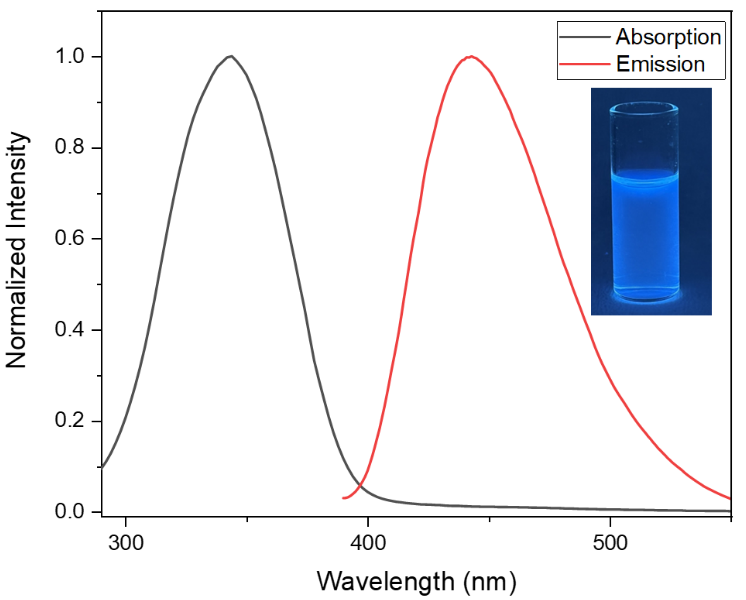
Figure 1. Absorption and Emission spectra of BCNO material in water-based solution.
This is also very important to mention that there is no spectral overlap between the two graphs, which means self-absorption of the material is limited and mostly all the excited molecules can be utilized in an effective emission. However, the basic aim of this work is the utilization of novel emitting coatings on plastic sheets to replace common plastics that are used in most greenhouses in Northern Europe as a cost-effective material. Therefore, we used the as-prepared BCNO solutions in water in combination with AEAPTMS to form a siloxone matrix and then to apply it as a uniform film on the plastic substrates. The optimal molar ratio among the materials is BCNO/AEAPTMS =1:2 to succeed in a uniform and high emissive film. An example of the film that was prepared can be seen in Figure 2 where we present the result of the application of pristine AEAPTMS and the combination of BCNO/AEAPTMS on plastic sheet before and after illumination with low intensity black light in the UV (lamp max. 365nm). The presence of AEAPTMS as a film in Figure 2 is only to prove that it does not emit any kind of visible light and blue light is due to the presence of BCNO. It is obvious that the combination of BCNO/AEAPTMS may give a high luminescent film that could be used in the construction of a greenhouse after developing a successful coverage of long-sized plastic sheet.
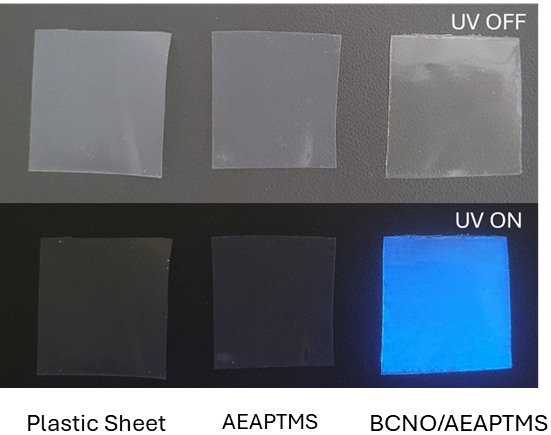
Figure 2. Image of plastic sheets covered either with siloxane matrix AEAPTMS or the combination AEAPTMS/BCNO either in dark or illumination with low intensity UV black light (max. at 365nm).
The optical characteristics of the as-prepared films were also investigated as these are presented in Figure 3a and 3b. In particular, the absorbance and emission properties of the composite BCNO/AEAPTMS film are presented in Figure 3a and 3b respectively. Figure 3c shows the spectral match of BCNO emission with the photosynthetic absorption bands of chlorophyll a and b.
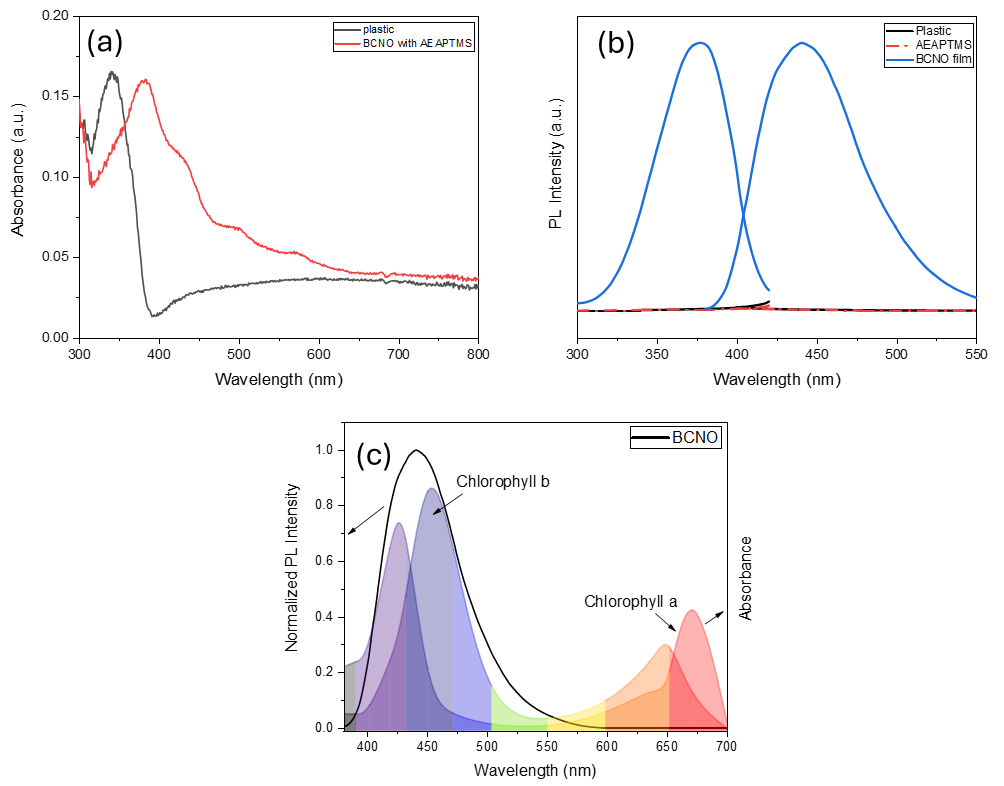
Figure 3. Optical properties of BCNO films: (a) Absorbance of BCNO/AEAPTMS film in comparison with untreated plastic sheet, (b) Excitation and Emission spectra of BCNO/AEAPTMS film, (c) Spectral match of BCNO emission with the photosynthetic absorption bands of chlorophyll a and b.
Specifically, the BCNO/AEAPTMS composite film has an absorbance maximum in UV region (397 nm) but there is also an overlap in shorter wavelengths in the visible range as the film exhibits a pale-yellow color. However, this behavior will be evaluated in practical application of the films to the lettuce growth in the greenhouse and its importance will be determined. The luminescent properties of the films were evaluated by recording their excitation and emission spectra. The excitation of the film is mainly located in the UV region from 300–415 nm with a maximum at 370 nm, which is very important because the film utilizes, to a great extent, the UV light that enters the greenhouse avoiding the direct exposure of the plants. The emission of the film is located in the 400–550 nm totally covering the first peak of chlorophyll’s absorbance that is very promising for the plants’ growth.
The film was used for the above optical characterizations and was applied as coverage on large plastic sheets and finally placed in a small greenhouse monitoring the growth of lettuce in a hydroponic cultivation. An image of the two greenhouses that were installed and the lettuce cultivation in them appears in Figure 4. One of them bears the active film that contains BCNO luminescent material on the plastic sheets that were positioned at the inner side of the plastic sheet in the greenhouse, while the second was used for reasons of comparison without any material’s coverage, just a plastic sheet.
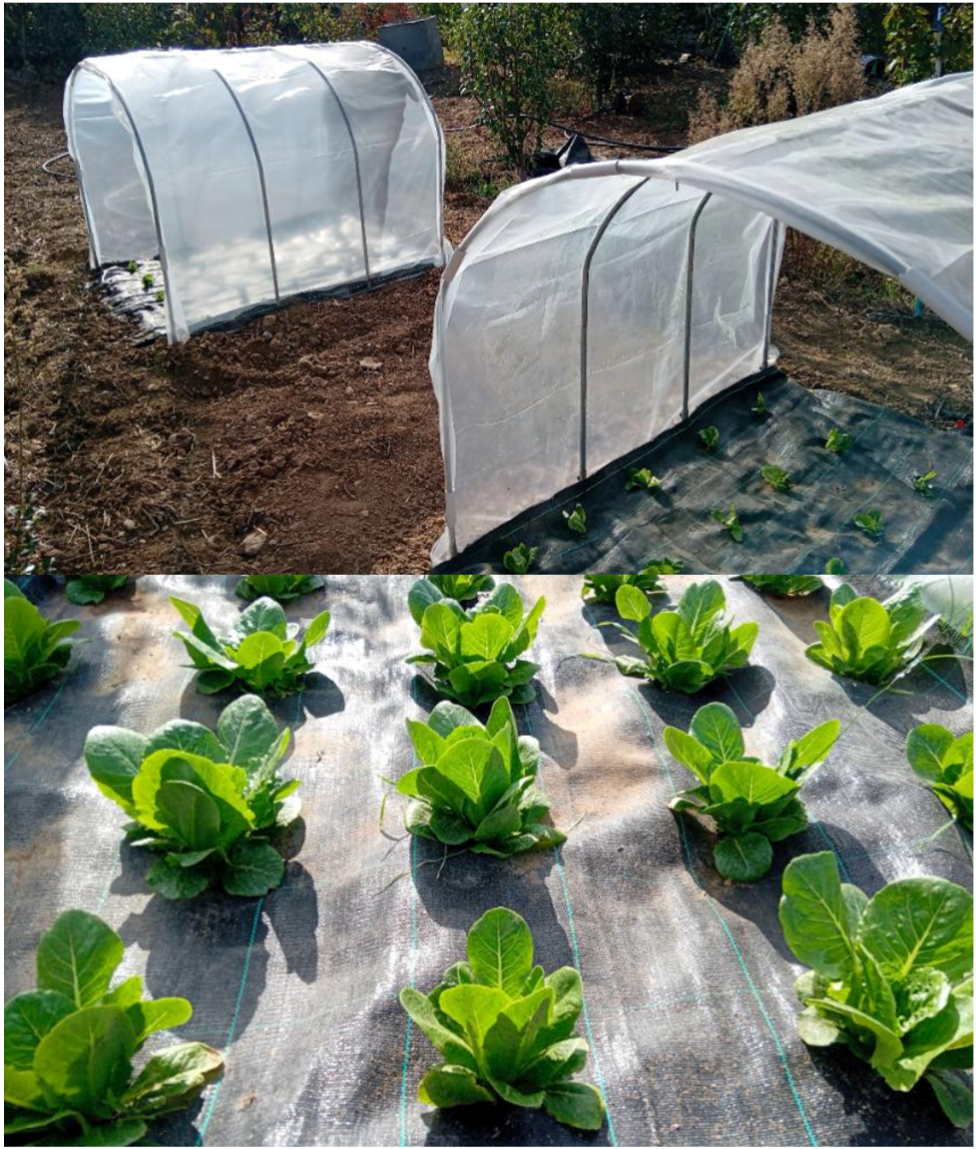
Figure 4. Photographic view of the experimental greenhouse setup: (a) 3 m2 greenhouses for lettuce cultivation under the presence of BCNO active material (right) and without it (left); (b) lettuce plants into the greenhouse.
Indeed, lettuce plants cultivated hydroponically in the presence of BCNO showed better growth characteristics with increased shoot fresh weight and dry biomass content (Figure 5). During the first 40 days of the cultivation period, the application of BCNO consistently enhanced both shoot fresh and dry weights. The increase in fresh weight was most prominent at days 10 and 20 (+10% and +16%, respectively), before stabilizing at 4.34% and 7.10% in the subsequent days. Similarly, dry weight showed a significant upward trend, with increases of 15% (day 10), 7.82% (day 20), 14.74% (day 30), and 7.02% (day 40).
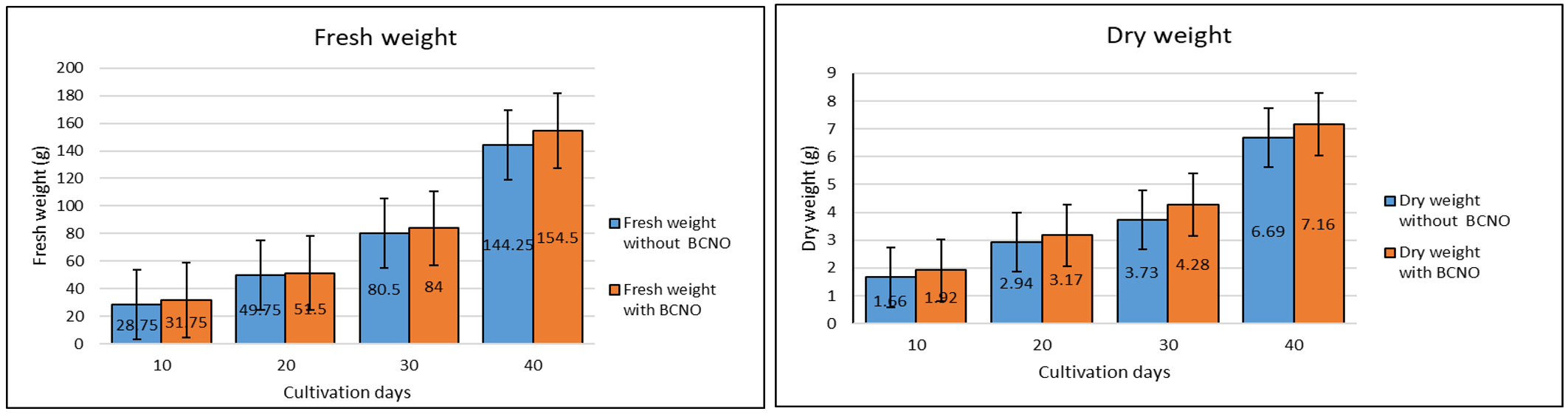
Figure 5. Effect of the presence of the LSC BCNO in the covering greenhouse material on the mean shoot fresh weight and dry weight of hydroponically cultivated lettuce plants during cultivation season of 40 days.
Possibly, the presence of the BCNO as an LSC resulted in better growth conditions for the plants, due to increased PAR by approximately 5% according to measurements taken throughout the cultivation period. In particular, the increased PAR indicated a positive impact on total chlorophyll content and plant leaf physiological functions by increasing the rates of physiological parameters, thus contributing to better growth rates and total yields.
The chlorophyll content was evaluated according to the following Equations (1)-(3) as reported in [27]:
where Chla and Chlb correspond to chlorophyll a and b, respectively. Also, A_665 refers to the absorbance at 665 nm for chlorophyll a, and A_648 refers to the absorbance at 648 nm for chlorophyll b. The total chlorophyll concentration was determined from Equation (3).
Furthermore, the total chlorophyll concentration increased with the application of BCNO in the covering material (Figure 6). Specifically, chlorophyll levels rose by 8.12% and 8% at days 10 and 20, respectively, followed by smaller increases of 1.9% at day 30 and 5.37% at day 40. This enhanced total chlorophyll concentration likely contributed to improved gas exchange rates and stimulated physiological parameters in the leaves. Also, additional measurements of physiological leaf parameters carried out with the Portable Photosynthesis System, indicated increased photosynthesis rates, transpiration rates and stomatal conductance of plants grown hydroponically into the greenhouse with BCNO covered material, compared to hydroponically cultivated plants into the control greenhouse respectively (Figure 7). Specifically, photosynthetic rates showed a slight initial decrease at day 10 (-2.13%) but consistently increased thereafter by 6.51%, 7.34%, and 6.19% at days 20, 30, and 40, respectively. Transpiration rates were also generally higher, peaking at day 30 (+9.23%), while stomatal conductance showed a steady improvement throughout the period, with the most notable increases observed at day 20 (+8.69%) and day 30 (+11.11%). These physiological gains reflect the previously noted increases in biomass and chlorophyll levels. All measurements were performed on leaves of a similar age, fully developed, on different days but at the same time of day and with similar weather conditions (full sunlight). All values are summarized in Table 1; positive values indicate an increase, while negative values indicate a decrease relative to the control group. The increased PAR in the presence of BCNO covered material, increased biomass content, total chlorophylls content, photosynthetic CO2 assimilation rate, respiration rates and stomata conductance achieved healthy growth and higher yields, in accordance with earlier findings [28,29].
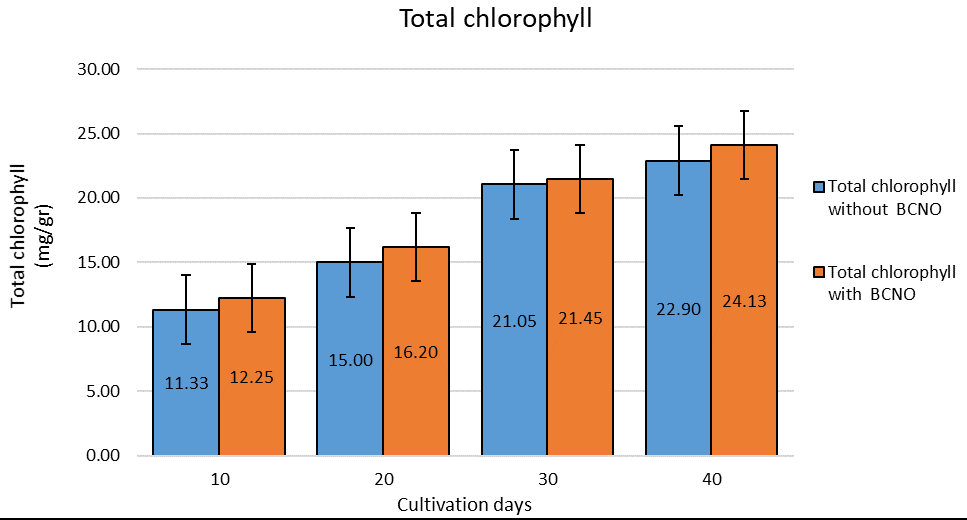
Figure 6. Effect of the presence of the LSC BCNO in the covering greenhouse material Total Chlorophyll content (mg/g fresh weight) of hydroponically cultivated lettuce plants during cultivation season of 40 days.
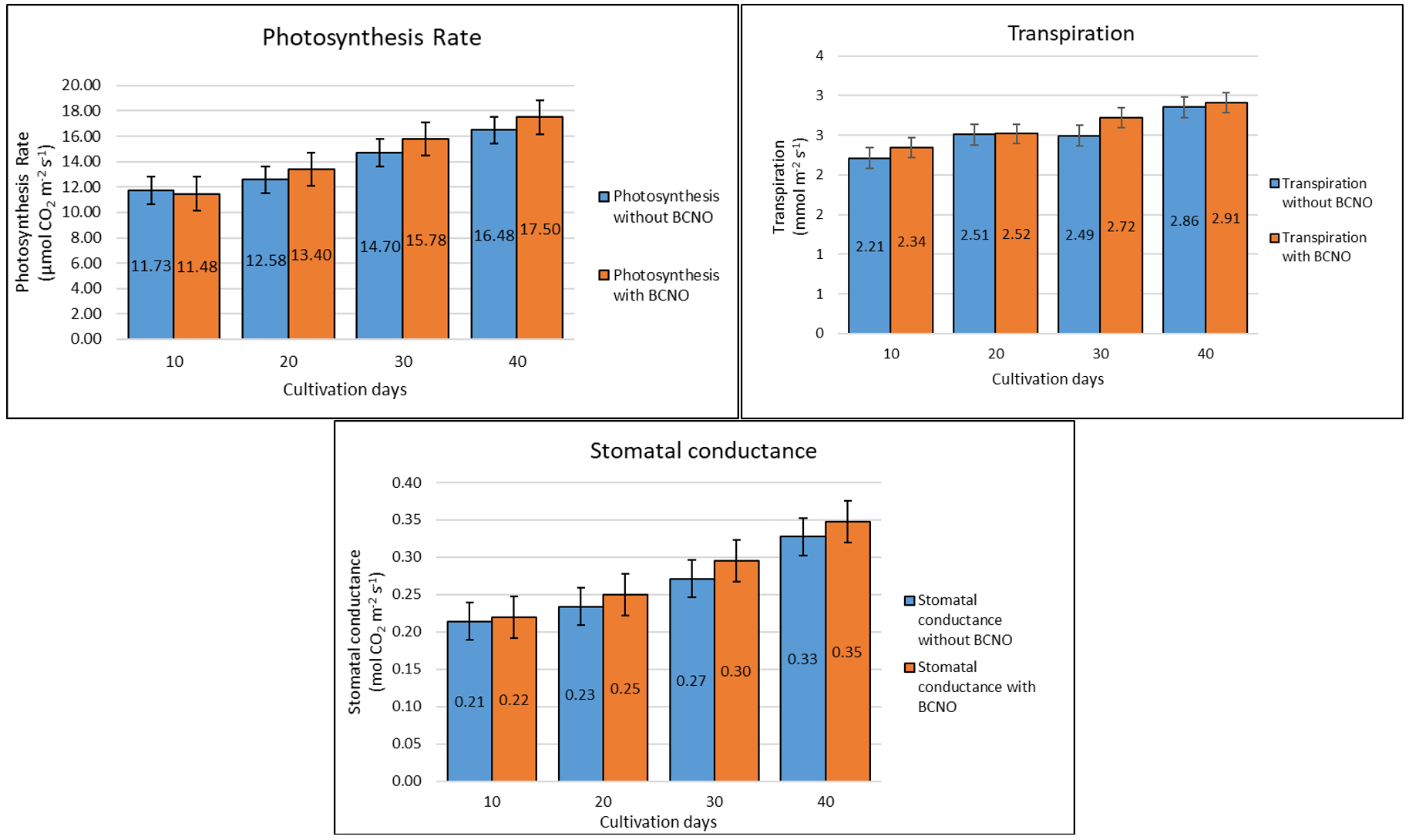
Figure 7. Effect of the presence of the LSC BCNO in the covering greenhouse material on net photosynthesis rate (μmol CO2 m-2 s-1), transpiration rate (mmol m-2 s-1) and stomatal conductance (mol CO2 m-2s-1), of hydroponically cultivated lettuce plants during cultivation season of 40 days.
Table 1. Percentage change (%) in growth and physiological parameters of plants grown in a greenhouse with BCNO-enriched casing material compared to the control group.

Table 2 summarizes the comparative performance data between BCNO and other luminescent materials. The comparison of the data shows that the BCNO material of the present work has significantly higher performances than other photoluminescent materials in the literature. Specifically, a maximum increase of +16% in the shoot fresh weight of lettuce is achieved on the 20th day of cultivation. This performance is superior to the corresponding increases offered by Quantum Dots (+13% and +15%) and Eu complexes (+10%), demonstrating that the conversion of UV radiation is extremely effective for enhancing biomass. This increase is supported by the improvement of the physiological parameters of the plant, as Table 1 records a gradual increase in Photosynthetic Rate (up to +7.34%) and Stomatal Conductance (up to +11.11%), which peak at day 30 and explain the steady enhancement of dry weight. In conclusion, BCNO is a particularly promising alternative for crop optimization, combining higher growth rates compared to other red emitting materials.
Table 2. Comparative performance of published LSC materials in agriculture.
A novel UV to blue BCNO luminescent film was prepared by the mixture of cheap boric acid, urea and citric acid under hydrothermal conditions. The present BCNO luminescent film was applied in a small greenhouse monitoring the growth of lettuce plants hydroponically cultivated in comparison with a standard greenhouse that only bears a plastic sheet as coverage. The BCNO film acts as an LSC system enhancing the light in blue region of visible light that fits to the first absorption peak of chlorophyll to the plants, promoting a cost effective and eco-friendly plant growth for agriculture. Indeed, the presence of BCNO yielded superior growth characteristics, including a maximum increase of 16% in shoot fresh weight and 15% in dry biomass. These improvements are closely linked to the enhanced physiological performance observed, specifically the stimulation of photosynthetic rate by up to 7.34% and an 11.11% increase in stomatal conductance. Overall, the integration of BCNO films in greenhouse covers represents a promising strategy for optimizing and utilizing and maximizing crop productivity.
Not applicable
Not applicable
The raw data supporting the conclusions of this article will be made available by the authors on request.
The studies were financially supported by the project M16ΣYN2-00102 that is implemented within the framework of Sub-Measure 16.1-16.2 "Establishment and operation of Operational Groups of the European Innovation Partnership for the productivity and sustainability of agriculture" - Action 2 of the Rural Development Programme (RDP) 2014-2020 and is co-financed by the European Agricultural Fund for Rural Development and the Special Management Service of the Region of Western Greece.
The authors have declared that no competing interests exist.
Conceptualization: E. Stathatos; G. Salachas; E. Pitsika. Methodology: E. Pitsika; S.A. Barla; E. Stathatos; G. Salachas. Validation: E. Pitsika; S.A. Barla; V. Giannokopoulos; C. Stefanou. Investigation: E. Pitsika; S.A. Barla; V. Giannokopoulos; C. Stefanou. Resources: E. Pitsika; S.A. Barla; Writing – Original Draft: E. Stathatos; S.A. Barla; Th. Andrikopoulou. Writing – Review & Editing: E. Stathatos; S.A. Barla; E. Pitsika; Th. Andrikopoulou. Funding Acquisition: E. Stathatos; G. Salachas.
| 1. | Chalkias DA, Stathatos E. The Emergence of Agrivoltaics: Current Status, Challenges and Future Opportunities. Springer Nature. 2024. [Google Scholar] |
| 2. | Chalkias D, Charalampopoulos C, Andreopoulou A, Karavioti A, Stathatos E. Spectral engineering of semi-transparent dye-sensitized solar cells using new triphenylamine-based dyes and an iodine-free electrolyte for greenhouse-oriented applications. J Power Sources. 2021;496:229842. [Google Scholar] [CrossRef] |
| 3. | Trommsdorff M., Gruber S., Keinath T., Hopf M., Hermann C., Schönberger F., Gudat C., Boggio A.T., Gajewsk M., Högy P., et al. Agrivoltaics: Opportunities for Agriculture and the Energy Transition. A Guideline for Germany [Internet]; 2024 [cited 2024 April 11]. Available from: https://www.ise.fraunhofer.de/en/publications/studies/agrivoltaics-opportunities-for-agriculture-and-the-energy-transition.html. |
| 4. | Asa'a S, Reher T, Rongé J, Diels J, Poortmans J, Radhakrishnan HS, et al. A multidisciplinary view on agrivoltaics: Future of energy and agriculture. Renew Sustain Energy Rev. 2024;200:114515. [Google Scholar] [CrossRef] |
| 5. | Sollazzo L, Mangherini G, Diolaiti V, Vincenzi D. A Comprehensive Review of Agrivoltaics: Multifaceted Developments and the Potential of Luminescent Solar Concentrators and Semi-Transparent Photovoltaics. Sustainability. 2025;17(5):2206. [Google Scholar] [CrossRef] |
| 6. | Lazaroiu AC, Gmal Osman M, Strejoiu C-V, Lazaroiu G. A comprehensive overview of photovoltaic technologies and their efficiency for climate neutrality. Sustainability. 2023;15(23):16297. [Google Scholar] [CrossRef] |
| 7. | Hosseinpanahi K, Abbaspour-Fard MH, Golzarian MR, Goharshadi EK, Vomiero A. Luminescent solar concentrators for greenhouse applications based on highly luminescent carbon quantum dots. Solar RRL. 2024;8(20):2400442. [Google Scholar] [CrossRef] |
| 8. | Mangherini G, Sollazzo L, Diolaiti V, Gawronska M, Sanna C, Damiano A, et al. Long-Term Reliability of Semi-Transparent Photovoltaic Panels Based on Luminescent Solar Concentrators. Energies. 2025;18(3):674. [Google Scholar] [CrossRef] |
| 9. | Sark WGv, Barnham KW, Slooff LH, Chatten AJ, Büchtemann A, Meyer A, et al. Luminescent Solar Concentrators-A review of recent results. Opt Express. 2008;16(26):21773-21792. [Google Scholar] [CrossRef] |
| 10. | Castelletto S, Boretti A. Luminescence solar concentrators: a technology update. Nano Energy. 2023;109:108269. [Google Scholar] [CrossRef] |
| 11. | Debije MG, Verbunt PP. Thirty years of luminescent solar concentrator research: solar energy for the built environment. Adv Energy Mater. 2012;2(1):12-35. [Google Scholar] [CrossRef] |
| 12. | Benetti D, Rosei F. Alternative uses of luminescent solar concentrators. Nanoenergy Adv. 2022;2(3):222-240. [Google Scholar] [CrossRef] |
| 13. | Loh KQ, Harbick K, Eylands NJ, Kortshagen UR, Ferry VE. Design guidelines for luminescent solar concentrator greenhouses in the United States. Adv Sustain Syst. 2025;9(2):2400749. [Google Scholar] [CrossRef] |
| 14. | Detweiler AM, Mioni CE, Hellier KL, Allen JJ, Carter SA, Bebout BM, et al. Evaluation of wavelength selective photovoltaic panels on microalgae growth and photosynthetic efficiency. Algal Res. 2015;9:170-177. [Google Scholar] [CrossRef] |
| 15. | Zheng L, Van Labeke M-C. Long-term effects of red-and blue-light emitting diodes on leaf anatomy and photosynthetic efficiency of three ornamental pot plants. Front Plant Sci. 2017;8:917. [Google Scholar] [CrossRef] |
| 16. | Purcell-Milton F, Gun'ko YK. Quantum dots for luminescent solar concentrators. J Mater Chem. 2012;22(33):16687-16697. [Google Scholar] [CrossRef] |
| 17. | Moraitis P, Schropp R, Van Sark W. Nanoparticles for luminescent solar concentrators-a review. Opt Mater. 2018;84:636-645. [Google Scholar] [CrossRef] |
| 18. | Hussain N, Ayoub I, Mushtaq U, Sehgal R, Rubab S, Sehgal R, et al. In: Rare-Earth-Activated Phosphors: Chemistry and Applications. Elsevier; 2022. p.3-41. [Google Scholar] [CrossRef] |
| 19. | Müller R, Okokhere-Edeghoghon B, Janowicz NJ, Bond AD, Kociok-Kohn G, Cox LMR, et al. Transparent, sprayable plastic films for luminescent down-shifted-assisted plant growth. Adv Mater Technol. 2025;10(6):2400977. [Google Scholar] [CrossRef] |
| 20. | Khan Q, Wang A, Li P, Hu J. Quantum Dots Illuminating the Future of Greenhouse Agriculture. Adv Sustain Syst. 2025;9(3):2401015. [Google Scholar] [CrossRef] |
| 21. | Pitsika E, Stathatos E. Optical and Photonic Performance of one-step synthesized Boron Carbon Oxynitride-Phosphor as promising Luminescent Solar Concentrator. Mater Chem Phys. 2025;131825. [Google Scholar] [CrossRef] |
| 22. | Abu-Shahba MS, Mansour MM, Mohamed HI, Sofy MR. Comparative cultivation and biochemical analysis of iceberg lettuce grown in sand soil and hydroponics with or without microbubbles and macrobubbles. J Soil Sci Plant Nutr. 2021;21(1):389-403. [Google Scholar] [CrossRef] |
| 23. | Křístková E, Doležalová I, Lebeda A, Vinter V, Novotná A. Description of morphological characters of lettuce (Lactuca sativa L.) genetic resources. Hortic Sci. 2008;35(3):113-129. [Google Scholar] [CrossRef] |
| 24. | Al-Kinani HAA, JERCA OI, BOBUŢAC V, Drăghici EM. Comparative study on lettuce growing in NFT and Ebb and Flow system. Sci Papers Ser B Hortic. 2021;65(1). [Google Scholar] |
| 25. | Kim MJ, Moon Y, Tou JC, Mou B, Waterland NL. Nutritional value, bioactive compounds and health benefits of lettuce (Lactuca sativa L.). J Food Compos Anal. 2016;49:19-34. [Google Scholar] [CrossRef] |
| 26. | Shatilov M, Razin A, Ivanova M. Analysis of the world lettuce market. IOP Conf Ser Earth Environ Sci;. 2019;395:012053. [Google Scholar] |
| 27. | Shinano T, Lei T, Kawamukai T, Inoue M, Koike T, Tadano T. Dimethylsulfoxide method for the extraction of chlorophylls a and b from the leaves of wheat, field bean, dwarf bamboo, and oak. Photosynthetica. 1996;32(3):409-415. [Google Scholar] |
| 28. | Cammarisano L, Donnison IS, Robson PR. The effect of red & blue rich LEDs vs fluorescent light on lollo rosso lettuce morphology and physiology. Front Plant Sci. 2021;12:603411. [Google Scholar] [CrossRef] |
| 29. | Zhou J, Li P, Wang J, Fu W. Growth, photosynthesis, and nutrient uptake at different light intensities and temperatures in lettuce. HortScience. 2019;54(11):1925-1933. [Google Scholar] [CrossRef] |
| 30. | Shoji S, Saito H, Jitsuyama Y, Tomita K, Haoyang Q, Sakurai Y, et al. Plant growth acceleration using a transparent Eu3+-painted UV-to-red conversion film. Sci Rep. 2022;12(1):17155. [Google Scholar] [CrossRef] |
| 31. | Parrish CH, Hebert D, Jackson A, Ramasamy K, McDaniel H, Giacomelli GA, et al. Optimizing spectral quality with quantum dots to enhance crop yield in controlled environments. Commun Biol. 2021;4(1):124. [Google Scholar] [CrossRef] |
| 32. | Simakin AV, Ivanyuk VV, Dorokhov AS, Gudkov SV. Photoconversion fluoropolymer films for the cultivation of agricultural plants under conditions of insufficient insolation. Appl Sci. 2020;10(22):8025. [Google Scholar] [CrossRef] |


Copyright © 2026 Pivot Science Publications Corp. - unless otherwise stated | Terms and Conditions | Privacy Policy